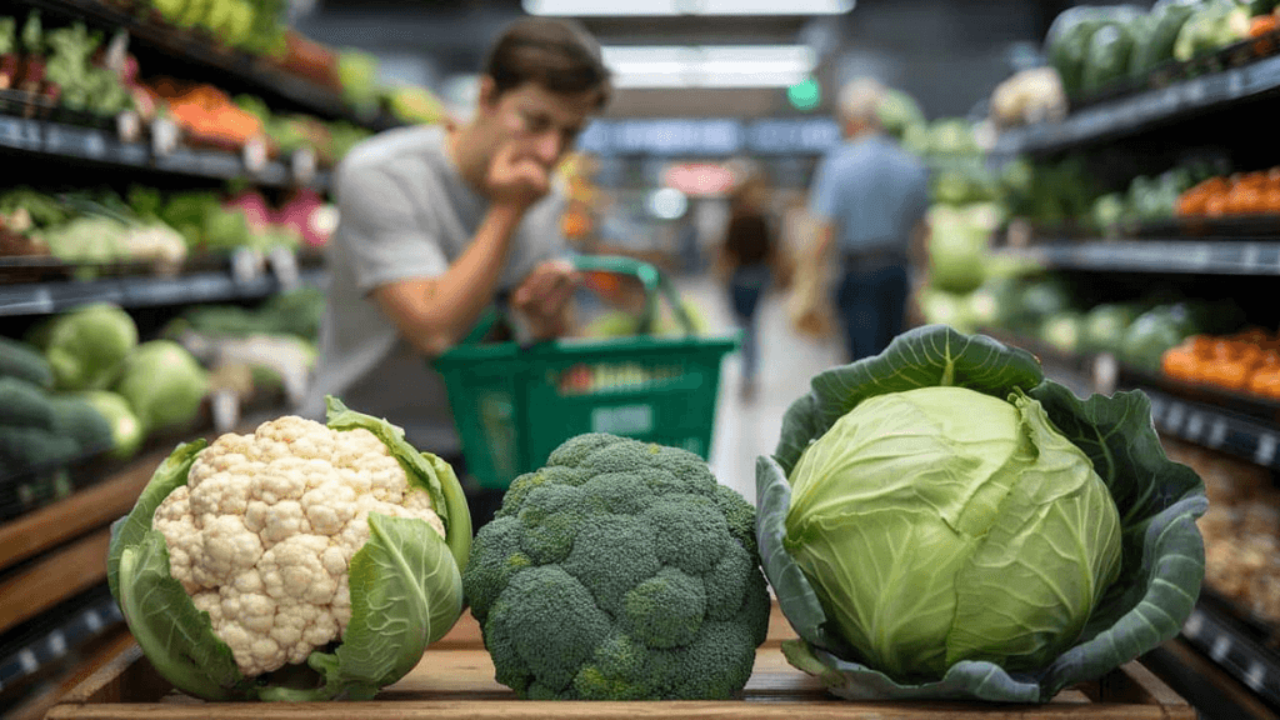
Cauliflower Broccoli Cabbage Same Plant: Cauliflower Broccoli Cabbage Same Plant sounds like a myth, yet it is a simple botanical truth hiding in plain sight. Most shoppers stand in the vegetable aisle comparing colors and prices, never guessing that these familiar greens share the same roots. The phrase Cauliflower Broccoli Cabbage Same Plant captures a fact that can completely change how you look at your dinner plate.
In this blog, you will discover how one wild coastal plant evolved into several common vegetables through careful human selection. You will also learn how understanding Cauliflower Broccoli Cabbage Same Plant can help you cook smarter, reduce food waste, and make healthier choices in 2026 when plant based eating continues to trend worldwide. According to recent food trend reports, brassica vegetables remain among the top nutrient dense produce items purchased globally, proving their lasting importance.
Cauliflower Broccoli Cabbage Same Plant
The idea of Cauliflower Broccoli Cabbage Same Plant becomes clearer when you look at their shared origin. All three vegetables come from the species Brassica oleracea, a hardy plant that once grew wild along the rocky coasts of Europe. Over centuries, farmers selected different traits from this single species. Some preferred larger leaves, others thicker stems, and some wanted tighter flower buds. These small choices shaped cabbage, broccoli, and cauliflower into distinct forms while keeping their genetic base connected.
Understanding Cauliflower Broccoli Cabbage Same Plant helps explain why these vegetables share similar flavors, textures, and nutritional benefits. They may look different in the kitchen, but at a botanical level, they remain close relatives molded by human hands and time.
Overview Table
| Key Point | Quick Insight |
| Botanical Origin | All come from Brassica oleracea |
| Wild Ancestor | Grew along European coastal cliffs |
| Human Influence | Farmers selected traits over centuries |
| Cabbage Form | Developed from enlarged leafy growth |
| Broccoli Form | Developed from clustered flower buds |
| Cauliflower Form | Developed from dense white curd flowers |
| Nutritional Similarities | High in fiber, vitamin C, antioxidants |
| Cooking Flexibility | Many parts can be swapped in recipes |
| Sustainability | Reduces waste when used creatively |
| Modern Popularity 2026 | Trending in plant based diets worldwide |
What? One plant, a lot of vegetables
It surprises many people to learn that cabbage, broccoli, and cauliflower are simply different expressions of the same plant. The wild ancestor of these vegetables was tough and bitter. It survived strong winds and salty air. Early farmers noticed natural variations in the plant. Some had broader leaves. Others had thicker stems. Some produced tighter flower clusters.

Instead of ignoring those differences, farmers saved seeds from the plants they liked most. Over generations, these repeated choices created clear varieties. Cabbage became a compact ball of layered leaves. Broccoli turned into green clusters of edible flower buds. Cauliflower formed a dense white head known as a curd.
This process did not happen overnight. It took hundreds of years of patient selection. That is why Cauliflower Broccoli Cabbage Same Plant is not marketing hype but a reflection of agricultural history.
This is called “artificial selection,” and it works on a simple principle
Artificial selection is the method humans used long before modern laboratories existed. Farmers observed plants, chose seeds from the best performers, and planted them again. They repeated this cycle year after year.
If they preferred larger leaves, cabbage improved. If they liked thick stems, kohlrabi developed. If they wanted compact flower buds, broccoli and cauliflower became more defined. The species remained the same, yet its appearance shifted based on human needs.
Understanding this principle makes Cauliflower Broccoli Cabbage Same Plant easier to grasp. It is not about genetic modification in the modern sense. It is about gradual change guided by careful seed saving.

In 2026, as more consumers seek transparency about food origins, learning about artificial selection builds trust in traditional farming methods.
How to really see the “one plant” behind your vegetables
Try a simple kitchen experiment. Place a cabbage, a head of broccoli, and a cauliflower on your counter. Look closely at their stems and leaf veins. Notice the similar earthy scent when you cut them.
Even though their shapes differ, their internal structures share patterns. The branching stems of broccoli resemble the inner core of cauliflower. The thick ribs of cabbage leaves feel similar to outer broccoli leaves.
This hands on observation helps you understand Cauliflower Broccoli Cabbage Same Plant beyond theory. It becomes real and visible.
You may also notice that the cooking reactions are similar. All three caramelize beautifully when roasted. All soften when steamed. All release a slightly strong aroma due to natural sulfur compounds that are common within the species.

Think of it in parts: cabbage is a leaf, broccoli and cauliflower are flowers, and kohlrabi is a stem
Breaking the plant into parts makes the concept simple.
- Leaves give you cabbage.
- Flower buds give you broccoli and cauliflower.
- Stems give you kohlrabi.
This practical view supports the truth behind Cauliflower Broccoli Cabbage Same Plant. Once you understand which part you are eating, you can cook more creatively.
For example, cauliflower stems can be sliced thin and stir fried like broccoli stems. Cabbage wedges can be roasted the same way many people roast cauliflower steaks. Seeing them as interchangeable plant parts reduces waste and increases flexibility in meal planning.
With grocery prices rising in 2026, this flexibility matters. Buying what is affordable and using it creatively can help stretch your food budget.
The secret superpower of knowing this
When you understand Cauliflower Broccoli Cabbage Same Plant, shopping becomes easier. Instead of asking which vegetable is healthier, you can focus on texture and flavor.

Do you want crunch for a salad? Choose cabbage. Do you want soft florets for roasting? Choose cauliflower. Do you want balanced flavor for stir fry? Choose broccoli.
Nutritionally, they share many benefits. They are rich in fiber, vitamin C, vitamin K, and plant compounds that support overall health. Recent dietary studies continue to recommend cruciferous vegetables as part of a balanced diet due to their potential role in supporting heart and digestive health.
Knowing they share a species also encourages less waste. The core of cauliflower can be chopped and cooked. Outer cabbage leaves can be added to soups. Broccoli stems can be peeled and sautéed.
This awareness transforms how you use each vegetable in your kitchen.
FAQs
1. Are broccoli, cauliflower, and cabbage genetically identical?
They belong to the same species, Brassica oleracea, but they are different cultivated varieties. They share a genetic base yet express different traits.

2. Does this mean they have the same nutrients?
They have similar nutrient profiles, including fiber and vitamin C. However, the exact amounts vary slightly between each vegetable.
3. Can they replace each other in recipes?
In many cases, yes. Texture and cooking time may differ slightly, but they can often be swapped in stir fries, roasts, and soups.
4. Is this related to genetic modification?
No. These varieties developed through traditional artificial selection over centuries, not through modern laboratory genetic engineering.
5. What other vegetables come from the same plant?
Other forms of Brassica oleracea include kale, Brussels sprouts, kohlrabi, Savoy cabbage, and Romanesco. All are shaped from the same original species.