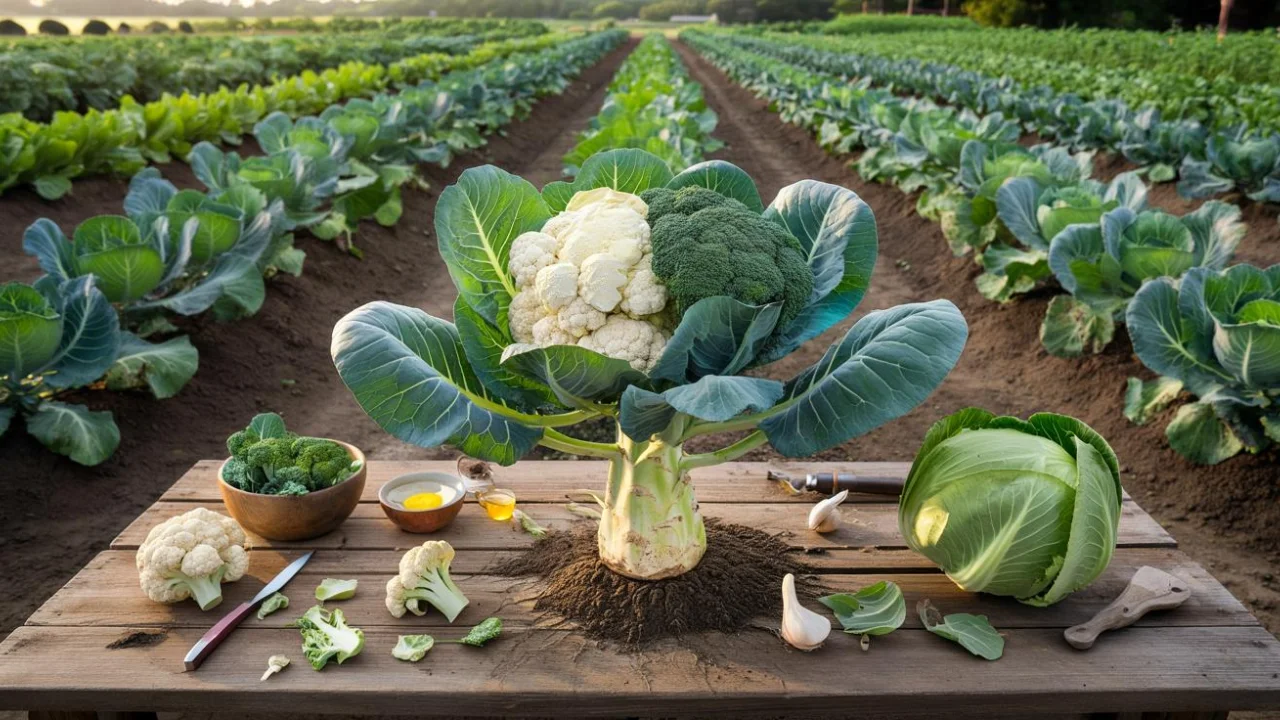
Cauliflower Broccoli Cabbage Same Plant: Cauliflower Broccoli Cabbage Same Plant is one of those facts that sounds wrong at first. You look at a tight white cauliflower, a leafy green cabbage, and a tree like broccoli and they seem like three completely different vegetables. But the truth is simple and fascinating. Cauliflower Broccoli Cabbage Same Plant is not a myth. It is a scientific fact rooted in history, farming, and plant breeding.
If you have ever wondered why these vegetables sometimes taste similar or cook in almost the same way, this article will give you clear answers. You will learn how one wild plant turned into several popular vegetables, why this matters in your kitchen, and how this knowledge can help you cook smarter and waste less food in 2026 and beyond.
Cauliflower Broccoli Cabbage Same Plant
The idea that Cauliflower Broccoli Cabbage Same Plant belongs to one species surprises many home cooks. All three come from a single species called Brassica oleracea. Over thousands of years, farmers carefully selected plants with certain traits. Some plants had bigger leaves. Some had tighter flower buds. Others formed dense heads. Those choices, repeated for generations, created cabbage, broccoli, and cauliflower from the same genetic base.
Today in 2026, plant scientists still study Brassica crops because they are among the most consumed vegetables worldwide. According to recent global agriculture reports, brassica vegetables remain in the top ten most grown vegetables due to their nutrition, adaptability, and demand. When you understand that Cauliflower Broccoli Cabbage Same Plant, you begin to see the produce aisle in a completely new way.
Overview Table
| Key Aspect | Explanation |
| Scientific Species | All belong to Brassica oleracea |
| Origin | Descended from a wild coastal plant in Europe |
| Edible Part of Cabbage | Thick layered leaves |
| Edible Part of Broccoli | Flower buds and stems |
| Edible Part of Cauliflower | Compact white curd |
| Farming Method | Selective breeding over centuries |
| Nutritional Similarity | High in fiber, vitamin C, antioxidants |
| Cooking Behavior | React similarly to heat and roasting |
| Flavor Compounds | Contain natural sulfur and sugars |
| Kitchen Flexibility | Often interchangeable in recipes |
One plant that looks like a lot of common vegetables
Walk through any supermarket and you will see cabbage stacked in layers, broccoli crowns bundled together, and cauliflower sitting pale and firm. Most shoppers assume they are only distant relatives. The reality is more interesting.

All three vegetables started from the same wild plant that grew along rocky coastlines. Early farmers noticed natural variations. Some plants had larger leaves. Some formed tighter buds. Over time, they saved seeds from the plants that showed desirable traits. That careful selection changed the plant’s shape without changing its species.
This is why Cauliflower Broccoli Cabbage Same Plant remains such an important concept. It shows how patient farming, not modern laboratories, shaped the vegetables we eat every week. Cabbage was developed for its leaf growth. Broccoli was selected for its flowering head. Cauliflower was bred for its compact, undeveloped flower clusters.
Understanding this history adds depth to something as simple as chopping vegetables for dinner.
What this secret connection means for cooking every day
Knowing that Cauliflower Broccoli Cabbage Same Plant can make cooking easier and less stressful. Many recipes treat them as separate ingredients, but they share structure and chemistry. That means they respond similarly to heat, salt, oil, and seasoning.
If you run out of broccoli, cauliflower florets can often replace it in a roasted dish. Shredded broccoli stems can stand in for cabbage in slaw. Roasted cabbage wedges can give a texture similar to thick cauliflower slices.

Because they share similar fiber and sugar content, they caramelize in comparable ways when roasted at high temperatures. In 2026, high heat roasting continues to trend across food blogs and professional kitchens because it brings out natural sweetness while reducing bitterness.
Instead of seeing three vegetables in your refrigerator, see one plant family with multiple forms. That mindset saves money and reduces food waste.
The science behind this explains why it works
The reason Cauliflower Broccoli Cabbage Same Plant behave alike in the kitchen lies in plant chemistry. These vegetables contain glucosinolates, natural sulfur compounds that create a strong smell when overcooked. They also contain natural sugars that brown beautifully under high heat.
When cooked gently for too long, sulfur compounds dominate and produce the smell many people dislike. When roasted quickly at high temperature, sugars caramelize first, creating a nutty and slightly sweet flavor.
This explains why so many people who disliked boiled cabbage as children enjoy roasted cabbage as adults. The plant has not changed. The cooking method has.

Research published in recent food science journals in 2025 confirms that roasting brassica vegetables increases perceived sweetness while reducing harsh flavor notes. This supports what chefs have known for years.
Small changes that make these vegetables taste good
Improving the flavor of these vegetables does not require complex techniques. It requires attention to heat and balance.
Set the oven to 220 degrees Celsius or 430 degrees Fahrenheit. Cut the vegetables evenly so they cook at the same speed. Spread them out on a tray instead of crowding them. Add salt before cooking and finish with lemon juice or vinegar for brightness.
Healthy fats such as olive oil help reduce bitterness. Mixing cabbage, broccoli, and cauliflower together on one tray creates contrast in texture while keeping flavors balanced.
The more you experiment, the more you realize that Cauliflower Broccoli Cabbage Same Plant gives you flexibility. A raw cabbage salad might need thinner slices. A stir fry may need higher heat. Each small adjustment improves the final result.

Important points
- All three vegetables belong to the same species
- Selective breeding created different shapes and edible parts
- They share similar nutrients and cooking behavior
- High heat roasting improves taste
- Technique matters more than the vegetable type
When you remember that Cauliflower Broccoli Cabbage Same Plant, grocery shopping becomes strategic. You can buy what looks fresh and substitute freely. This is especially helpful in 2026, when food prices continue to fluctuate globally.
Why this matters more today
Modern consumers are more focused on plant based eating than ever before. Searches for healthy brassica recipes, low carb cauliflower dishes, and roasted cabbage steaks continue to grow. Understanding their shared origin makes meal planning more creative.
Home cooks want flexibility, nutrition, and value. Since Cauliflower Broccoli Cabbage Same Plant, you can rotate them in weekly meals without changing your entire shopping list. They deliver fiber, antioxidants, and vitamin C in similar amounts, making them staples in balanced diets.
This knowledge also reduces kitchen anxiety. Instead of worrying about exact ingredients, you can focus on technique and flavor.
FAQs
1. Are cauliflower, broccoli, and cabbage genetically identical?
They belong to the same species, Brassica oleracea, but they are different cultivated varieties developed through selective breeding.

2. Can I swap cauliflower for broccoli in recipes?
In most roasted, baked, or stir fried dishes, yes. They cook similarly and absorb seasoning in comparable ways.
3. Why do they sometimes smell strong while cooking?
Overcooking releases sulfur compounds. Cooking at higher heat for shorter periods reduces this effect.
4. Which one is the healthiest?
All three are rich in fiber, vitamin C, and antioxidants. Nutritional differences are small.
5. Is this information still accurate in 2026?
Yes. Current agricultural research continues to confirm that cabbage, broccoli, and cauliflower are cultivated varieties of the same plant species.