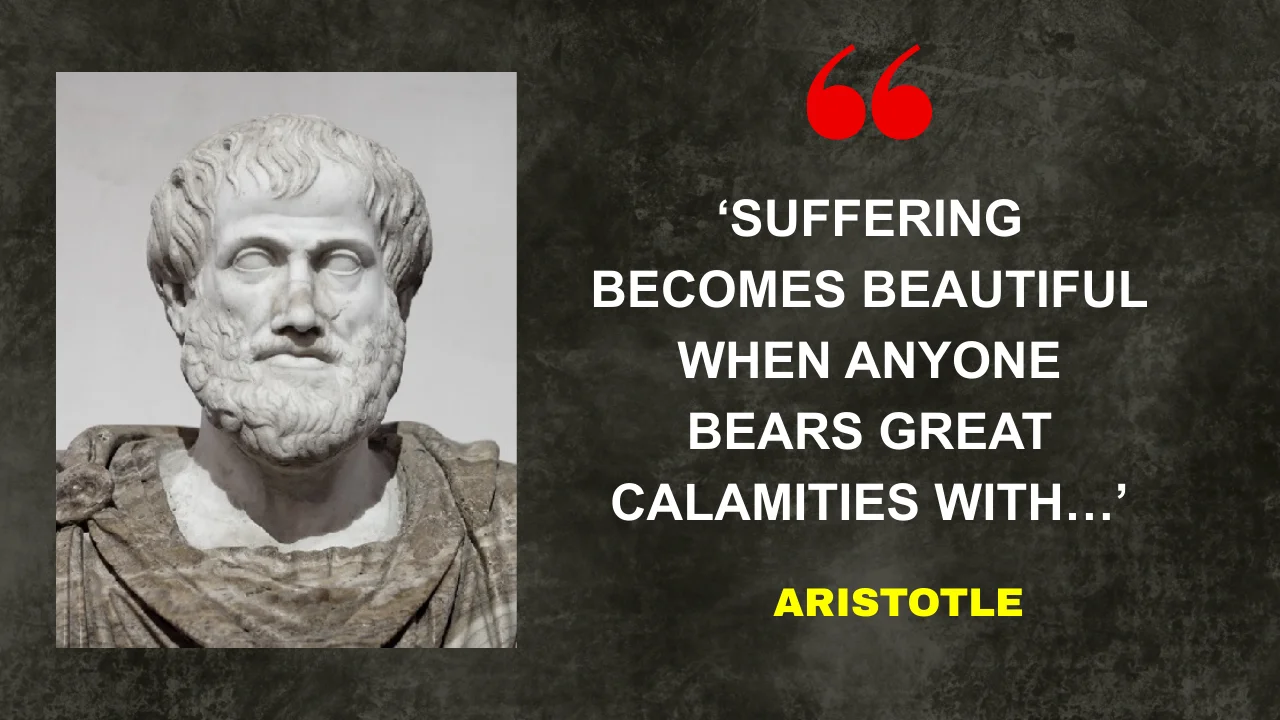
Quote of the day by Aristotle: Quote of the day by Aristotle has been gaining attention again in 2026, especially at a time when people are openly talking about stress, burnout, and emotional resilience. In a world that feels uncertain and fast moving, the Quote of the day by Aristotle feels surprisingly personal. It does not offer empty motivation. Instead, it offers grounded wisdom about how to face hardship with dignity.
In this blog post, we will explore the deeper meaning behind the Quote of the day by Aristotle, understand its philosophical roots, and see why it still matters today. You will also find a clear overview table, key lessons, and practical insights that connect this ancient idea to modern life. If you are searching for the meaning of this quote, its relevance, or its ethical background, you are in the right place.
Quote of the day by Aristotle
The Quote of the day by Aristotle reads:
“Suffering becomes beautiful when anyone bears great calamities with cheerfulness, not through insensibility but through greatness of mind.”
The Quote of the day by Aristotle is more than a poetic line. It reflects a deep ethical belief about character and strength. In simple terms, Aristotle is saying that hardship itself is not beautiful, but the way a person responds to it can be. When someone faces serious problems with calm courage and emotional balance, that response becomes admirable. This idea connects directly to modern conversations around resilience, mental strength, and emotional intelligence. In 2026, as global surveys continue to show rising stress levels, this timeless thought feels more relevant than ever. It reminds readers that dignity during difficulty is a sign of true inner power.
Overview Table
| Key Aspect | Details |
| Philosopher | Aristotle |
| Birth Year | 384 BCE |
| Birthplace | Stagira, Greece |
| Famous Student | Alexander the Great |
| Major Work on Ethics | Nicomachean Ethics |
| Central Theme of Quote | Moral beauty in endurance |
| Key Virtue | Greatness of mind |
| Ethical Principle | Virtue as balance between extremes |
| Modern Relevance | Emotional resilience and character strength |
| Core Message | Responses define character, not circumstances |
Quote of the day today
The Quote of the day by Aristotle is widely shared across social media platforms, leadership blogs, and academic discussions. In a time where mental health awareness is at its peak, people are searching for deeper meaning behind resilience. According to recent global wellness reports in 2026, stress and anxiety remain among the top concerns worldwide. That is why this quote feels current.

The quote does not glorify suffering. It focuses on response. When Aristotle talks about bearing calamities with cheerfulness, he is not suggesting fake positivity. He is pointing toward a steady and mature mindset. That type of strength stands out in a world that often reacts quickly and emotionally.
For anyone dealing with personal setbacks, career pressure, or unexpected loss, the Quote of the day by Aristotle offers perspective. It gently shifts the focus from what is happening to how you choose to handle it.
Quote of the day meaning
Understanding the Quote of the day by Aristotle requires looking at his idea of virtue. Aristotle believed that good character is built through habits. A person becomes courageous by practicing courage regularly. Virtue is not automatic. It is trained and shaped over time.
When he says suffering becomes beautiful, he is speaking about moral beauty. There is something powerful about a person who faces difficulty without bitterness. That does not mean they do not feel pain. It means they do not allow pain to control their behavior.
The phrase greatness of mind is important. It points to emotional maturity, self respect, and calm thinking. Aristotle clearly separates this from insensibility. Being emotionally cold is not admirable. True strength comes from feeling deeply yet responding wisely.
In modern language, this connects with emotional intelligence, resilience training, and leadership development. Many leadership experts in 2026 highlight calm decision making during crisis as a top quality of strong leaders. Aristotle described that quality centuries ago.

Quote of the day by Aristotle: Virtue and endurance in Aristotle’s ethics
Aristotle’s ethical system is built around balance. In his work Nicomachean Ethics, he explains that virtue lies between two extremes. Courage stands between cowardice and recklessness. Generosity stands between wastefulness and selfishness.
The endurance described in the Quote of the day by Aristotle follows the same logic. On one side is despair. On the other side is emotional numbness. The virtuous response lies in steady composure.
Aristotle also introduced the concept of eudaimonia, often translated as human flourishing. According to him, real happiness comes from living in alignment with virtue. Even when life becomes difficult, a person can still flourish by acting with integrity and wisdom.
Suffering, in this view, becomes a test of character. It reveals whether a person has developed inner discipline. The Quote of the day by Aristotle reminds readers that growth often happens during discomfort.
Quote of the day: Historical context of resilience
Aristotle lived during a period of political change and uncertainty in ancient Greece. He studied under Plato in Athens and later became the tutor of Alexander the Great. Wars, shifting alliances, and power struggles shaped the society around him.
In such an environment, questions about character and leadership were practical concerns. Citizens had to deal with instability and conflict. The idea of facing hardship with dignity was not theoretical advice. It was a daily reality.

The Quote of the day by Aristotle reflects this background. It speaks to people who must remain steady even when circumstances feel unstable. Today, as global news cycles bring constant change, that message still resonates.
Enduring relevance of the Quote of the day
In 2026, resilience is more than a personal trait. It is a professional skill. Companies invest in resilience workshops and emotional intelligence training. Mental wellness platforms continue to grow. The Quote of the day by Aristotle fits naturally into these discussions.
The distinction between cheerfulness and insensibility is especially powerful. Ignoring pain is not healthy. At the same time, being overwhelmed by it can be destructive. Aristotle promotes balance.
This balanced approach is valuable for leaders, parents, students, and anyone navigating uncertainty. Strength does not have to be loud. Often, it is quiet and controlled.
Quote of the day: A legacy of intellectual depth
Aristotle’s influence goes far beyond ethics. He contributed to logic, biology, politics, and literature. His method of careful observation and structured thinking shaped education for centuries.
Yet his reflections on character remain the most relatable. The Quote of the day by Aristotle shows that he understood human struggle deeply. He did not promise a life without pain. Instead, he offered guidance on how to live with honor despite it.

That is why his words continue to appear in modern discussions about resilience, leadership, and personal growth.
FAQs
1. What is the main idea behind the Quote of the day by Aristotle?
The main idea is that suffering can reveal moral beauty when handled with calm strength and dignity rather than emotional numbness.
2. What does Aristotle mean by greatness of mind?
Greatness of mind refers to emotional maturity, self control, and noble character during difficult times.
3. Is Aristotle encouraging people to ignore their pain?
No. He clearly distinguishes cheerfulness from insensibility. He supports feeling pain but responding with wisdom.
4. How is this quote relevant in 2026?
With rising stress and global uncertainty, the message about resilience and emotional balance is highly relevant today.
5. Where did Aristotle explain his ideas about virtue?
He explained his ethical ideas mainly in his book Nicomachean Ethics, where he described virtue as balance and moral excellence.