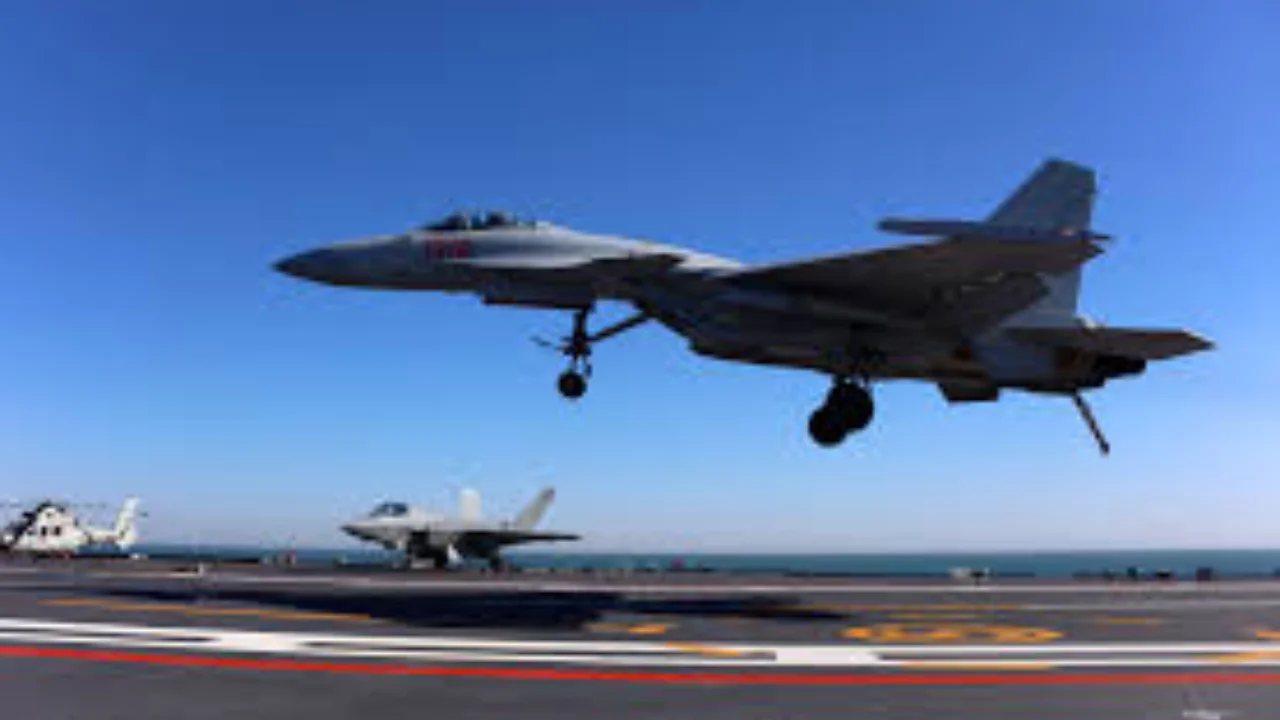
China Fifth-Generation Jet EMALS: China Fifth-Generation Jet EMALS is no longer just a technical phrase used in defense circles. It is now a real event that has changed the conversation about naval air power in 2026. With the successful launch of a stealth fighter from its newest aircraft carrier using electromagnetic catapult technology, China has stepped into a space that was once seen as a clear American advantage. The phrase China Fifth-Generation Jet EMALS is now tied to a milestone that defense analysts across Washington, Tokyo, and Canberra are closely watching.
This development is not only about a jet taking off from a ship. It is about strategy, reach, and influence. The China Fifth-Generation Jet EMALS breakthrough shows how quickly Beijing is moving in advanced carrier aviation, and why this matters for the balance of power in the Indo Pacific. In this article, you will find a clear breakdown of what happened, why it matters, how it compares with the United States, and what it could mean for global security in the coming years.
China Fifth-Generation Jet EMALS
The China Fifth-Generation Jet EMALS milestone centers on the aircraft carrier Fujian and the launch of the Shenyang J-35 using an electromagnetic aircraft launch system. This makes China the first country outside the United States to demonstrate a catapult launch of a fifth generation stealth fighter from a carrier deck using this advanced system. Unlike older ski jump carriers, EMALS allows aircraft to take off with full fuel and weapons, extending strike range and improving mission flexibility. In simple terms, this achievement strengthens China naval power projection and signals a new phase in carrier based stealth fighter operations.
Overview of the Milestone
| Key Element | Details |
| Aircraft Carrier | Fujian |
| Launch Technology | Electromagnetic Aircraft Launch System |
| Stealth Fighter | Shenyang J-35 |
| Additional Fighter | Shenyang J-15T |
| Support Aircraft | KJ-600 airborne early warning aircraft |
| Previous Carriers | Liaoning and Shandong used ski jump ramps |
| Estimated Strike Range | Up to 2,000 kilometers with full load |
| Testing Timeline | Sea trials from 2022 to 2026 |
| Expected Full Operational Status | By Summer 2026 |
| Strategic Impact | Expands Chinese blue water naval capability |
Fujian rewrites the rules at sea
When Fujian entered sea trials in 2022, many observers expected gradual progress. Instead, the carrier moved quickly into advanced flight testing. Unlike its predecessors Liaoning and Shandong, Fujian does not rely on a ski jump ramp. It uses catapult assisted takeoff.
Ski jump systems force aircraft to reduce fuel or weapons weight to get airborne safely. That limits combat range and payload. With EMALS, jets can launch fully loaded. That single shift changes how far a carrier group can operate and how much force it can bring to a crisis zone.
For China, this means moving from coastal defense toward true blue water naval operations. It also means carrier air wings can operate deeper into the Western Pacific and potentially beyond.

What EMALS really does for Chinese power
Electromagnetic launch technology replaces steam catapults with electric motors. The system pushes aircraft down the flight deck in a controlled and steady way.
The advantages are practical and strategic:
- Heavier aircraft can launch with full fuel and weapons
- Smoother acceleration reduces structural stress
- Faster reset times allow more aircraft launches in less time
Chinese state media reports suggest that carrier based strikes could reach up to 2,000 kilometers from the ship. If accurate, that significantly expands the effective reach of Chinese naval aviation.
The United States developed this technology for carriers such as USS Gerald R. Ford. However, the public demonstration of a stealth fighter launch from a Chinese carrier using EMALS has added a powerful symbolic layer to the China Fifth-Generation Jet EMALS story.
Three aircraft, one carefully staged message
The launch sequence did not involve just one aircraft. It featured three different platforms:
- Shenyang J-35 stealth fighter
- Shenyang J-15T multirole carrier fighter
- KJ-600 airborne early warning aircraft
The J-35 represents the future of carrier based stealth fighter operations in China. It is designed with radar evasion and advanced sensors in mind.

The J-15T shows that China can adapt existing platforms to new catapult systems.
The KJ-600 may be the most strategically important. As a flying radar and command center, it enhances situational awareness and helps coordinate long range missile and air operations. Together, these aircraft demonstrate that the China Fifth-Generation Jet EMALS milestone is about a complete carrier air wing, not a single test launch.
A fast track into China’s frontline fleet
Fujian moved from launch to advanced testing in a short period. The projected timeline indicates completion of major EMALS testing by Autumn 2025, joint exercises through Winter 2025 and early 2026, and full operational certification by Spring or Summer 2026.
This speed has drawn attention from military planners. If the timeline holds, the People’s Liberation Army Navy will soon field one of the most modern conventionally powered carriers in service.
The China Fifth-Generation Jet EMALS development fits into a broader pattern of rapid naval expansion, including new destroyers, submarines, and long range missile systems.
America’s EMALS dilemma
The United States remains the most experienced carrier operator in the world. Carriers like USS Gerald R. Ford and the Nimitz class continue to dominate global deployments.

However, EMALS development in the United States faced technical challenges and long testing phases. While the United States maintains a larger fleet and global presence, the China Fifth-Generation Jet EMALS achievement has reshaped perceptions. In strategic competition, perception can influence deterrence as much as raw numbers.
The key question for analysts is not who invented the technology, but who can deploy it effectively at scale.
A powerful carrier with a key limitation
Fujian has one important constraint. It is conventionally powered. Unlike nuclear powered American carriers, it must refuel more frequently. This affects endurance during long distance deployments.
Nuclear carriers can operate for years without refueling their reactors. Fujian will rely on supply ships and logistics networks to maintain extended operations.
Even so, the China Fifth-Generation Jet EMALS milestone shows that propulsion limits do not prevent meaningful power projection. Analysts expect future Chinese carriers to consider nuclear propulsion to close this gap.
From coastal defence to global ambitions
For decades, China naval strategy focused on near sea defense. The China Fifth-Generation Jet EMALS breakthrough signals a wider ambition.

With advanced carrier based stealth fighter capability, China can:
- Project air power far from its coastline
- Support overseas interests and sea lanes
- Maintain a presence in strategic maritime zones
This transformation aligns with broader goals of expanding influence across the Indo Pacific and protecting trade routes. For regional states and the United States, it means planning for more frequent encounters with modern Chinese carrier groups.
Key concepts behind the headlines
Understanding the China Fifth-Generation Jet EMALS milestone requires clarity on two concepts.
A fifth generation fighter combines stealth shaping, advanced sensors, networked data systems, and high maneuverability. Examples include the Lockheed Martin F-35 and the Chengdu J-20. The J-35 aims to bring similar traits to carrier operations.
Anti access and area denial is a strategy that seeks to make it risky for adversaries to operate near a country’s territory. By combining long range missiles, submarines, and carrier air power, China strengthens this layered defense model.
FAQs
What makes the China Fifth-Generation Jet EMALS launch historic?
It is the first time China has launched a fifth generation stealth fighter from a carrier using electromagnetic catapult technology.

How does EMALS improve carrier operations?
It allows aircraft to launch with full fuel and weapons, improves reliability, and supports faster launch cycles.
Is Fujian nuclear powered?
No. Fujian is conventionally powered and requires regular refueling.
How does this compare with the United States Navy?
The United States still operates more carriers and has decades of experience, but China is narrowing the technology gap.
When will Fujian become fully operational?
Current projections suggest full operational status by Summer 2026 if testing continues as planned.